
Heat-resistant spiral-wound membrane
A spiral-wound membrane family for separation, concentration and purification. Review the membrane grade against the feed, temperature and cleaning conditions.
Review sanitary spiral-wound membranes for food and beverage separation and concentration. Confirm the supplied grade, materials, retention characteristics and temperature, pressure and pH limits for the selected model.
Discuss application & supply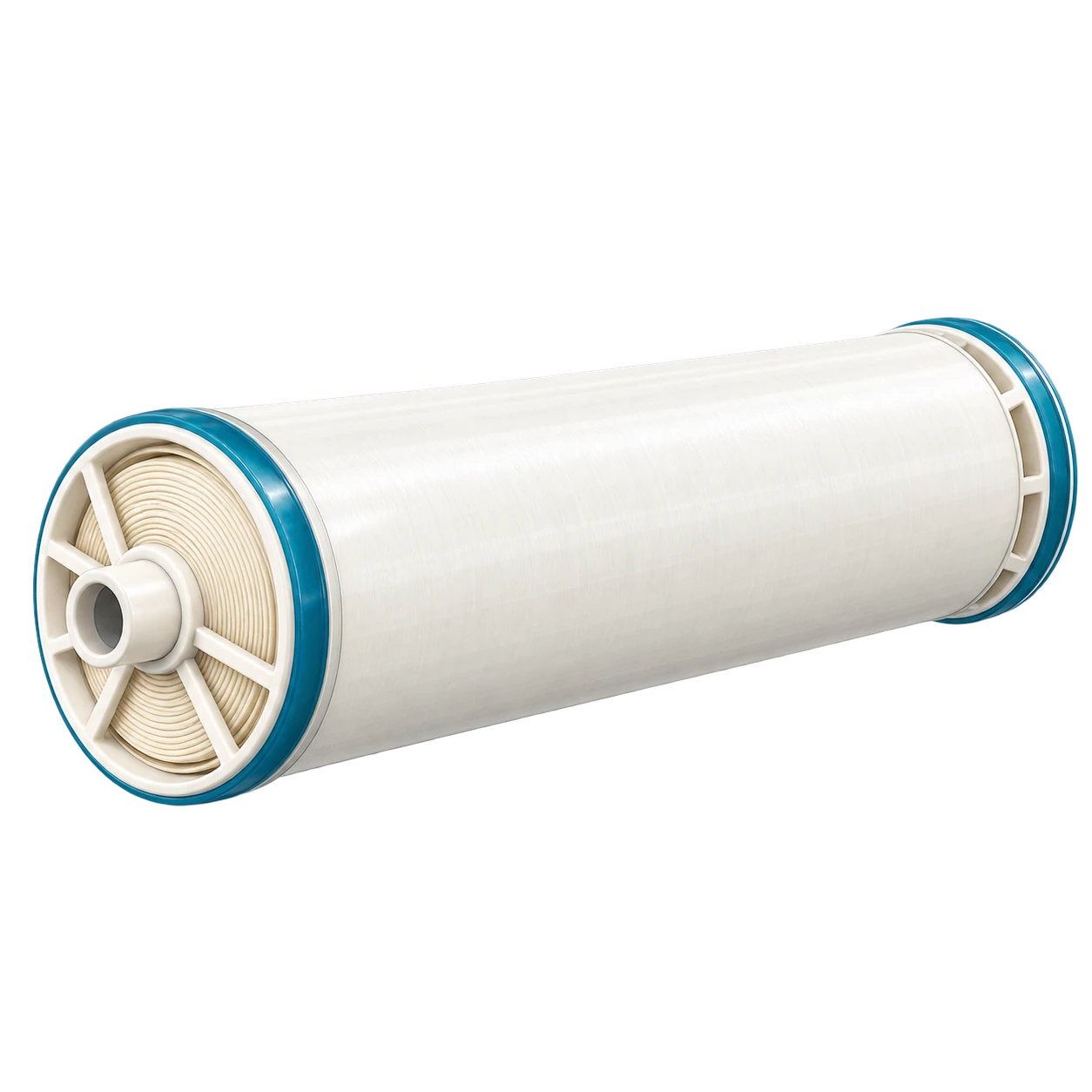
Industrial application examples
See where equipment is used in the process.

- Operating/cleaning records and feed
- RO element and test conditions
- Permeate flux and salt rejection
- Fouling, scaling and defect inspection
- Module comparison against baseline
Connections to review
- 02 → 03 Testing at defined conditions
- 02 → 04 Condition inspection
- 03 → 05 Permeation/rejection assessment
- 04 → 05 Review alongside condition/history
The manufacturer’s reference describes removing RO elements for controlled-pressure flux and salt-rejection testing, inspecting fouling/scaling/defects and comparing performance with a baseline. Verify site results, test conditions and replacement decisions against the source and case-specific evidence. The diagram shows neither actual equipment nor numerical results.
An original explanatory schematic, not a product or installation photograph or a piping design.
Prepare selection and evaluation.
- 01Characterize the feed
- 02Compare membrane grades
- 03Evaluate the actual feed
- 04Confirm operating conditions
Information to prepare
- Feed composition, solids, viscosity and pH
- Target separation, concentration or purification quality
- Throughput, recovery and concentration factor
- Operating temperature, pressure and cleaning conditions
- Existing membrane, housing and evaluation timeline
Process guidance and application references
Spiral-wound membrane inside a pressure vessel

Illustrations show typical installation contexts, not product photos or drawings. Confirm connections and dimensions against the selected equipment's documentation.
Separate process temperature from what the spiral assembly can withstand
Relevant manufacturer: PHILOS Co., Ltd.
- The problem on site
- A heat-resistant membrane layer does not tell you the limits of the adhesive, spacer, seal or pressure vessel. A viscous feed or coarse particles can still obstruct the channel and increase pressure losses and product hold-up.
- Proposed solution
- Review the production and clean-in-place cycles separately, including the combination of temperature, pressure, duration and cleaning agents. Compare modules against the target fraction, channel constraints and repeated restoration of permeate performance after cleaning with the actual feed.
- What to verify before selection
- Bring operating and cleaning history, feed temperature, viscosity and solids, and housing or adapter drawings. Do not read heat-resistant as a steam-sterilisation claim, a specific temperature-time guarantee or a statement of interchangeable fit.
Next stepCompare vessel and seal checks for sanitary spiral membranes