
Membrane compressed-air dryer
A membrane compressed-air dryer for moisture control at the use point. Review flow, pressure, temperature and the target pressure dew point.
Membrane drying does not replace particle, oil or microbial controls. Verify inlet-air pretreatment and the supplied model’s flow, pressure and dew-point operating range.
Discuss application & supply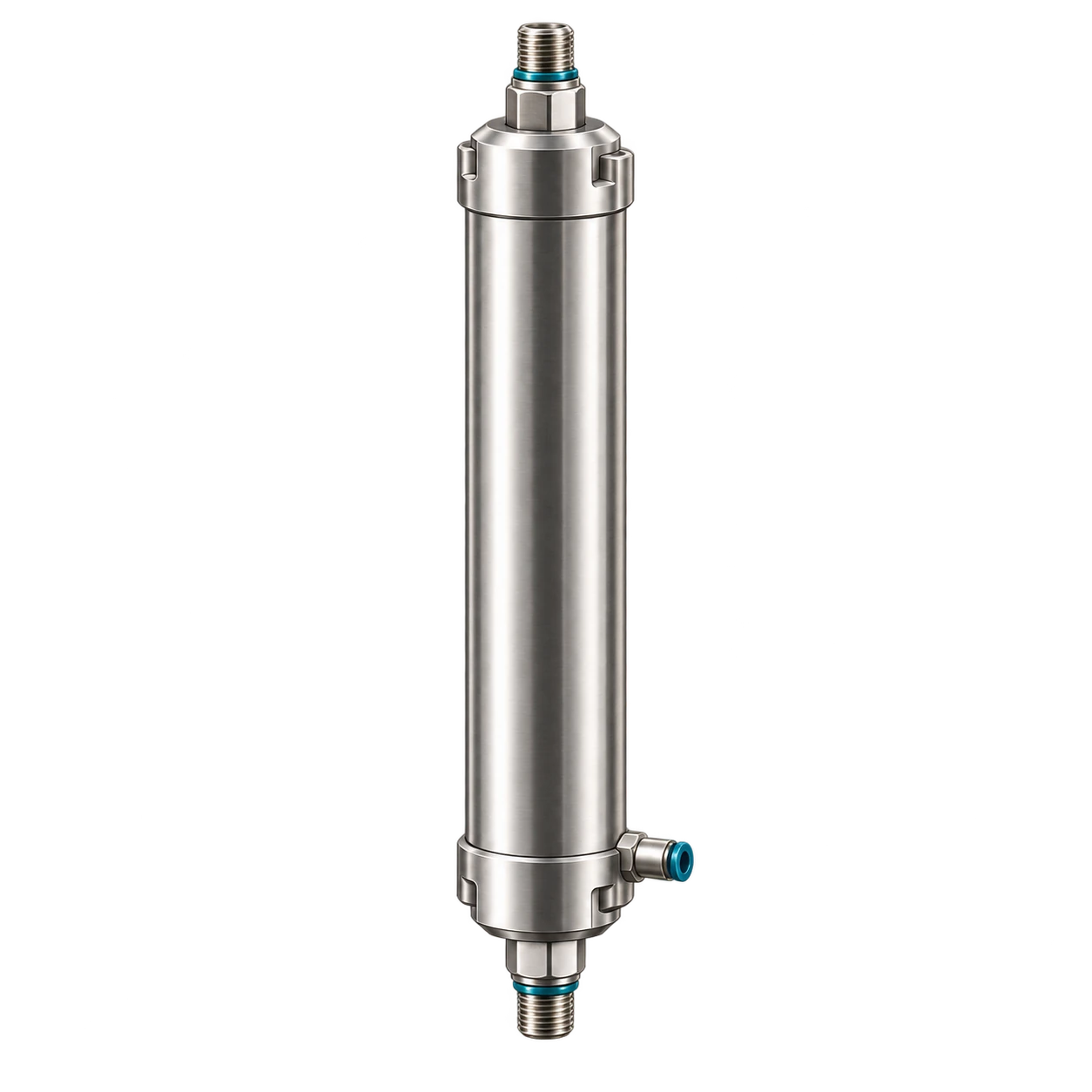
Industrial application examples
See where equipment is used in the process.
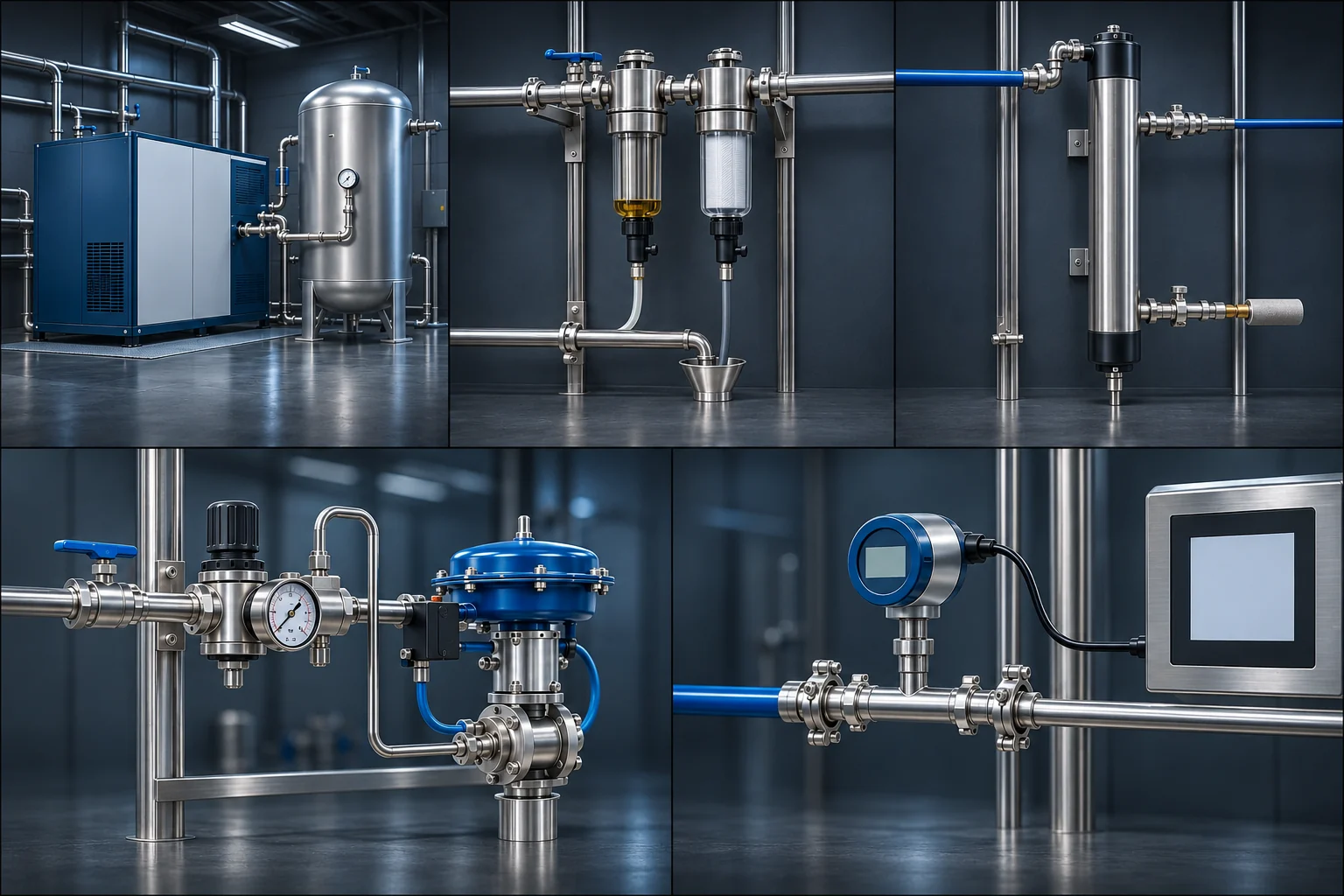
- Compressed-air supply
- Pretreatment/drain
- Membrane drying
- Regulation/equipment use point
- Dew-point/flow check
Connections to review
- 01 → 02 Compressed-air supply → Pretreatment/drain
- 02 → 03 Pretreatment/drain → Membrane drying
- 03 → 04 Membrane drying → Regulation/equipment use point
- 03 → 05 Membrane drying → Dew-point/flow check
Drying controls moisture. It does not replace particle, oil or microbial controls, and differs from room-humidity control.
A conceptual illustration created to explain equipment and application locations. It is not an actual product photograph, installation photograph or piping/wiring design.
Prepare selection and evaluation.
- 01Define use-point needs
- 02Review pretreatment
- 03Compare model operating ranges
- 04Record pressure dew point
Information to prepare
- Flow and reference conditions
- Inlet pressure, temperature and moisture
- Target pressure dew point and measurement point
- Particle, oil and condensate pretreatment
- Pressure drop, purge and installation conditions
Process guidance and application references
Membrane air dryer on a pneumatic line
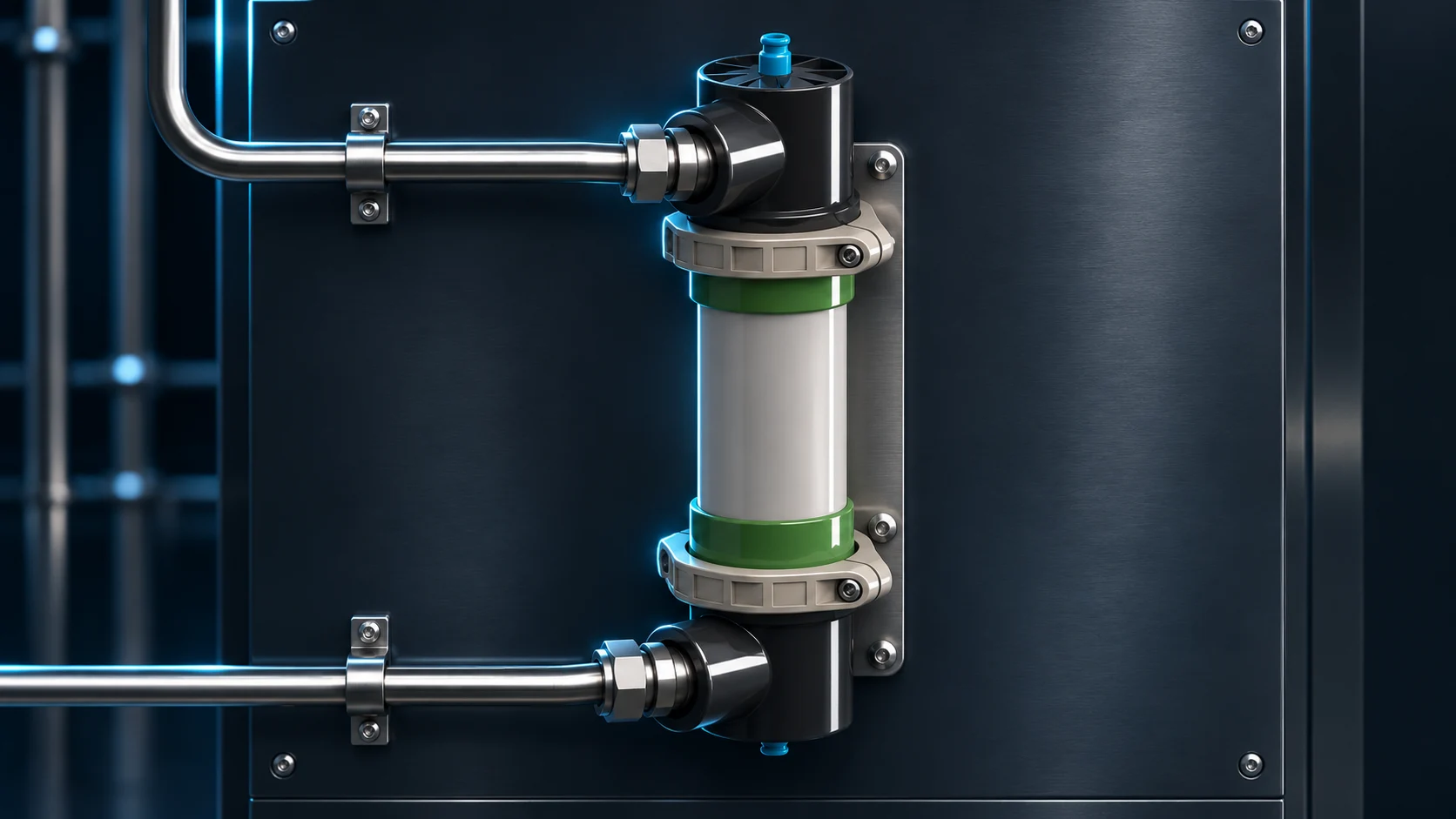
Illustrations show typical installation contexts, not product photos or drawings. Confirm connections and dimensions against the selected equipment's documentation.
Define drying at the equipment inlet
- The problem on site
- If pneumatic equipment stops intermittently or condensation returns, plant-room readings alone cannot show what reaches the inlet.
- Proposed solution
- Define the dryer’s role against equipment inlet requirements and the existing pretreatment and drainage. Review air-use and service access together. Review central treatment and drainage first. Compare point-of-use drying with a piping correction only where the equipment still needs local treatment.
- What to verify before selection
- Confirm the pressure basis of the dew point, changing demand and line condition. Assess other air-quality requirements separately. Record normal and problematic conditions at the equipment inlet, and agree where and under what conditions acceptance will be checked.
Next stepReview point-of-use pressure dew point and pretreatment